
beauty and brutality
the haunting power of charm, feat Killing Stalking by Koogi

Disclaimer: The following content discusses sensitive topics such as abuse and graphic violence (not in a lot of detail). Please please proceed with caution and prioritize your well-being.
The haunting and controversial world of Killing Stalking has captivated and divided audiences since its debut. This psychological thriller Manhwa by Koogi delves into themes of obsession, abuse, and trauma, wrapped in a visually striking art style that juxtaposes beauty with brutality. Amid its gripping narrative lies a thought-provoking phenomenon: the influence of "pretty privilege" on how audiences interpret and respond to its characters and themes, revealing unsettling truths about perception and bias.
For those unfamiliar, Killing Stalking debuted in November 2016 and quickly gained notoriety within the webtoon and BL (Boys' Love) communities. The manhwa's dark and complex storyline follows Yoon Bum, a socially isolated young man with an unhealthy obsession with Oh Sangwoo, a seemingly charismatic individual who harbours a far darker and more violent side. What begins as Yoon Bum’s invasive infatuation spirals into a chilling tale of manipulation, captivity, and psychological torment.
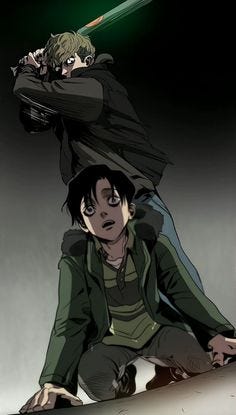
The author of Killing Stalking, Koogi, has explicitly stated that the manhwa is not a romantic story but a psychological horror that delves into the complex and harrowing nature of abuse, trauma, and obsession. Despite this clear intent, many readers have twisted the narrative, interpreting it through a romantic lens or idealizing the toxic relationship at its core.
This misinterpretation has sparked controversy, as it not only undermines the story's core message but also raises questions about how audiences process and respond to dark, complex themes when presented alongside compelling visuals and charismatic characters.
While Killing Stalking has undeniably drawn significant attention due to the intrigue generated by pretty privilege, this phenomenon comes with troubling implications that warrant deeper exploration. The manhwa’s use of visually appealing characters to tell a story of abuse and violence has the potential to inadvertently soften the impact of its themes, making the disturbing content more palatable to some readers.
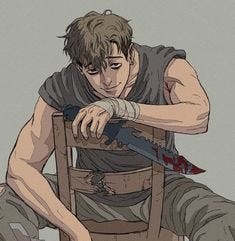
The dynamic raises pressing questions about the responsibilities of creators in storytelling and the complexities of audience engagement. Can creators truly control how their work is received, especially when they deliberately frame morally reprehensible characters in aesthetically pleasing ways? Koogi designed Sangwoo to be both captivating and monstrous, creating a dissonance that mirrors the complexity of real-world abuse dynamics. However, when this careful crafting is filtered through audience biases — including the inclination to idealize attractive characters — the original intent risks being overshadowed.
The phenomenon of pretty privilege also forces audiences to confront their complicity. Why do attractive characters so often evoke sympathy, leniency, or even admiration, regardless of their actions? Sangwoo, as a character, commits heinous acts of manipulation, violence, and murder, yet his good looks and confident demeanour have led some readers to excuse or glorify his behaviour.
Similarly, Yoon Bum’s frail and pitiable appearance garners sympathy, sometimes at the expense of acknowledging his invasive and problematic tendencies. This interplay complicates the narrative, as audiences may find themselves drawn to characters not because of their depth or relatability, but because their appearances skew perceptions.
The broader implications of this are significant. By rendering abuse and violence more digestible through attractive characters, stories like Killing Stalking risk normalizing or romanticizing toxic behaviours, especially for impressionable readers. They can inadvertently contribute to harmful narratives that conflate beauty with goodness or justify abusive actions under the guise of complexity. These risks highlight the delicate balance creators must maintain when presenting morally ambiguous or outright villainous characters in ways that invite empathy or fascination.
Here’s the thing: that’s exactly the point! The interplay between pretty privilege and the dark themes of Killing Stalking isn’t an accidental byproduct — it’s an intentional aspect of Koogi’s storytelling. The dissonance between Sangwoo’s outward charm and his inner monstrosity serves to heighten the horror, forcing readers to confront their discomfort and biases. By presenting a character who is as alluring as he is dangerous, Koogi underscores how appearances can be deceiving, a reflection of how abuse often manifests in real life.
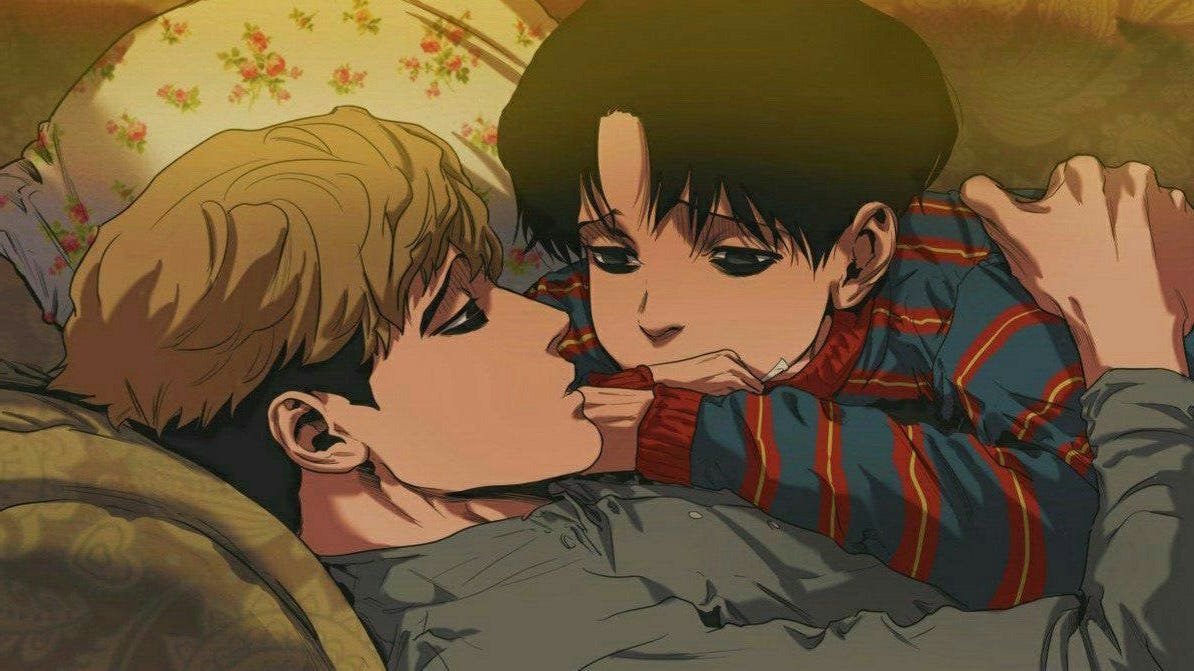
Abusers like Sangwoo often rely on their charm and charisma to manipulate others, creating a façade that hides their true nature. This duality is at the heart of the story’s psychological horror. It’s meant to make readers uneasy, blurring the lines between fascination and revulsion. The audience’s tendency to sympathize with or even romanticize Sangwoo because of his attractiveness mirrors the real-world phenomenon of excusing toxic or harmful behaviour when it comes from someone deemed "beautiful." Koogi isn’t glorifying this dynamic; she’s holding up a mirror to it, daring readers to examine their reactions.
The same goes for Yoon Bum, whose vulnerability evokes a mix of pity and discomfort. His frail appearance and tragic backstory make it easy for readers to empathize with him, even as his actions — such as stalking Sangwoo — challenge the boundaries of morality. By crafting characters that elicit such conflicted responses, Koogi engages the audience in an uncomfortable yet critical dialogue about the complexities of abuse, trauma, and obsession.
This intentional dissonance is what makes Killing Stalking so provocative and polarizing. It’s not meant to be a straightforward tale of good versus evil or victim versus abuser. Instead, it thrives in the grey areas, where beauty and brutality coexist, and where the audience is forced to grapple with their own biases and preconceptions.
Pretty privilege isn’t just a narrative device—it’s the very foundation of the story, forcing readers to confront uncomfortable truths about perception, bias, and the deceptive power of beauty.
As I stated, it's not exactly a light read?? Hopefully everyone still enjoyed.
Thanks for reading :)